
NewsDetails
How to Choose a Filter Supplier: A Buying Guide for Fleets and Equipment Owners
author:Chengrui time:2026-08-25 17:26:03 Click:165
If you've ever been stranded on a job site because a cheap filter failed mid-shift, you already know the true cost of choosing the wrong filter supplier. It is not just the part. It is the hours lost, the dispatcher scrambling for coverage, and the repair bill that follows. For fleet managers and equipment owners, filters are small components with oversized consequences. Getting the supply chain right matters more than most people realize until it goes wrong.
Why Your Filter Supplier Matters More Than You Think
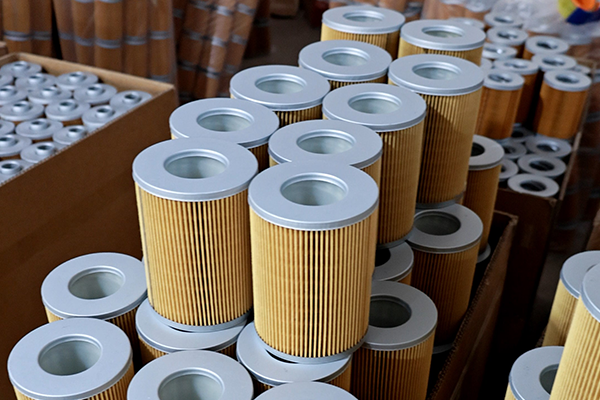
Filters sit at the frontline of every engine system. They trap contaminants before they reach critical components, extending the life of pumps, injectors, cylinders, and bearings. When a supplier ships inconsistent quality — a misaligned seal, a wrong micron rating, a media that degrades prematurely — the filter becomes the weakest link in your operation rather than its first line of defense.
Working with a reliable filter manufacturer means your trucks and machines get consistent protection shift after shift. The difference between a trusted supplier and a random wholesale contact is often the difference between a vehicle that runs 300,000 miles and one that blows a turbo at 80,000. Most operators do not think about this until they are already on the hook for expensive repairs.
Quality Certifications to Look For
The first thing to evaluate when vetting a filter supplier is their certifications. A credible factory will hold ISO 9001, which shows they have documented quality management systems in place. ISO 14001 is a bonus — it signals environmental responsibility in their production process, which increasingly matters to larger buyers with ESG obligations.
Beyond generic manufacturing certs, ask whether their products meet industry-specific standards. For heavy-duty applications, look for filters that have been tested to OEM specifications or third-party lab standards. A filter that simply claims to be "heavy duty" without documentation is a gamble you do not need to take.
Some suppliers will provide test reports, batch traceability, and material data sheets. If they hesitate to share this information, that silence itself is a data point. Walk away or negotiate harder on price to account for the risk you are absorbing.
Product Range and Compatibility
You want a supplier who can cover your fleet in one order rather than forcing you to chase down three different manufacturers for oil filters, fuel filters, air filters, and hydraulic filters. Broad product range simplifies inventory management and usually means the factory has enough volume to invest in proper quality control across their line.
Compatibility matters just as much. Your supplier should be able to confirm cross-reference coverage for the makes and models you operate — whether that is Caterpillar equipment, Volvo trucks, or mixed fleets with multiple OEM brands. If they cannot tell you which of their part numbers replaces a Baldwin or a Fleetguard filter in your system, they are not ready to support a real operation.
Bonus points if the supplier offers filters designed for specific operating conditions: high-heat environments, dusty construction sites, cold-climate startup cycles. A one-size-fits-all catalog might cover the basics but will not optimize performance in your specific conditions.
Pricing, MOQs, and Supply Reliability
Nobody buys filters on price alone — but price still matters, especially when you are buying in bulk for a fleet of twenty or two hundred units. The key is understanding what you are actually paying for. The lowest bidder often cuts corners on filter media, seal compounds, or pleat density. These are invisible to the naked eye but make a huge difference in the field.
Ask about minimum order quantities. Some factories require large MOQs that strain smaller operators. Others can accommodate mixed SKUs in a single order, which is far more practical if you run a diverse fleet. Flexibility in order size is a real advantage when you are trying to manage cash flow while keeping parts in stock.
Lead time is another non-negotiable. If a supplier quotes four weeks and your shop runs on a just-in-time schedule, that mismatch will cost you. Build relationships with suppliers who can commit to realistic timelines and follow through. The ones who communicate proactively about delays before they become crises are worth their weight in gold.
Red Flags to Watch Out For
A supplier that cannot show you a physical sample before you place a full order is a red flag. So is one that has no website, no clear company address, and no verifiable business registration. The filter industry, like many manufacturing sectors, has its share of brokers who resell products of unknown origin with zero accountability.
Watch out for prices that seem too good. If a wholesale price on a heavy-duty oil filter is 60 percent below market rate, something is wrong — usually the media, the construction, or both. A filter that costs less to buy but fails twice as often is not a savings.
Finally, avoid suppliers with no after-sales support. If something arrives damaged, arrives wrong, or fails early in service, you need a responsive contact who will make it right. Suppliers who treat every order as a one-time transaction are not partners you can build around.
References
ISO. (2023). ISO 9001:2015 Quality Management Systems — Requirements. International Organization for Standardization.
SAE International. (2022). SAE J1981: Performance Specification — Lubricating Oil Filters. SAE International.
U.S. Department of Energy. (2021). Maintaining Vehicle Fleet Fuel Filters: Best Practices for Government Fleets. DOE Vehicle Technologies Office.
Society of Automotive Engineers (SAE). (2020). Heavy-Duty Diesel Engine Filtration Standards and Testing Protocols. SAE Technical Papers.
 Recommended Products


 Contact us
—— Contact:Mr. Gao
—— Tel:+86 19565234361
—— Email:gaomark706@gmail.com
—— Url:https://www.jzl-filter.com
—— Address:Hejian City, Cangzhou City, Hebei Province