
NewsDetails
Common Materials Used in Oil Filters
author:Chengrui time:2026-02-05 17:03:54 Click:116
Selecting the right oil filter material is essential for protecting engines, maintaining lubrication efficiency, and extending service life. In automotive, industrial, agricultural, and power generation systems, oil filters remove contaminants that would otherwise damage bearings, pistons, and hydraulic components.
Behind every reliable oil filter is professional manufacturer production and scalable factory production capability that ensures oil filter material consistency, dimensional accuracy, and stable filtration performance for bulk supply markets. This article explores the most common oil filter material types, their roles, and how production quality supports dependable filtration solutions.
Why Oil Filter Material Matters
The performance of an oil filter depends largely on the oil filter material used in its construction. Different materials affect:
·Filtration efficiency
·Flow resistance
·Dirt-holding capacity
·Temperature stability
·Chemical compatibility
·Service life
If the oil filter material is poorly selected, contaminants pass through, pressure drops occur, or the filter degrades under heat and chemical exposure.
Through advanced factory production, oil filter material selection is optimized to balance protection, flow, and durability across operating environments.
Primary Categories of Oil Filter Material
Oil filters are assembled from multiple oil filter material groups, each serving a specific mechanical and functional purpose.
Filter Media Material
The filter media is the heart of any oil filter. It determines how well contaminants are trapped while allowing oil to flow freely.
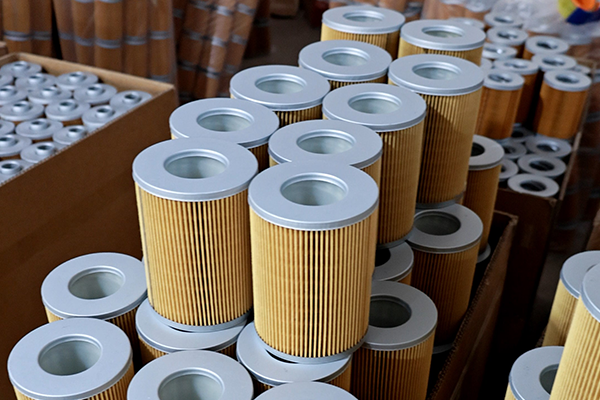
Cellulose Media
Cellulose is one of the most common oil filter material choices. Made from treated wood fibers, it offers:
·Good filtration efficiency
·Low production cost
·Adequate flow capacity
·Compatibility with standard oils
However, cellulose media has limited heat and chemical resistance compared to advanced materials.
Synthetic Fiber Media
Synthetic oil filter material uses polymer-based fibers designed for high-performance applications. Advantages include:
·Higher dirt-holding capacity
·Better temperature stability
·Consistent pore size
·Longer service intervals
Many modern engines prefer synthetic oil filter material for extended oil change cycles.
Blended Media
Blended oil filter material combines cellulose and synthetic fibers. This hybrid design balances cost and performance by improving efficiency while maintaining acceptable flow behavior.
Through controlled manufacturer production, blended oil filter material is engineered for both passenger vehicles and industrial equipment.
Structural Materials in Oil Filters
Beyond the filter media, oil filters rely on additional oil filter material types to maintain mechanical strength and sealing performance.
Metal Housing
The outer shell is usually made from steel or aluminum. This oil filter material provides:
·Pressure resistance
·Impact protection
·Structural stability
·Corrosion resistance
High-quality metal oil filter material ensures the filter withstands vibration and pressure fluctuations during operation.
Center Tube
The center tube supports the filter media and prevents collapse under pressure. Common oil filter material options include:
·Perforated steel
·Stainless steel
·Reinforced polymer
Through precise factory production, center tube oil filter material is formed with uniform hole patterns to maintain flow stability.
End Caps and Adhesives
End caps seal the filter media to prevent unfiltered oil from bypassing the system. Typical oil filter material options include:
·Steel end caps
·Fiberboard end caps
·Polymer composites
Adhesives bond the media to the end caps and must resist oil, heat, and pressure. High-quality oil filter material bonding improves reliability and service life.
In modern manufacturer production, automated bonding processes ensure consistent oil filter material adhesion across bulk batches.
Gasket and Sealing Materials
The gasket is another critical oil filter material component. It prevents oil leakage between the filter and engine block.
Common gasket oil filter material types include:
·Nitrile rubber
·Silicone rubber
·Fluoroelastomers
Each oil filter material option offers different temperature and chemical resistance. Silicone, for example, performs well in extreme temperature environments, while nitrile suits standard applications.
Through stable factory production, gasket oil filter material is molded with accurate geometry for reliable sealing under pressure.
Bypass Valve Materials
Most oil filters include a bypass valve to protect engines when the filter becomes restricted.
The oil filter material used in bypass valves typically includes:
·Steel springs
·Polymer valve discs
·Rubber sealing elements
These materials allow controlled oil flow when pressure reaches a preset threshold, preventing oil starvation.
Proper oil filter material selection ensures the bypass valve operates smoothly without sticking or leaking.
Anti-Drainback Valve Materials
The anti-drainback valve keeps oil inside the filter when the engine is off, reducing dry starts.
Common oil filter material choices include:
·Nitrile rubber
·Silicone rubber
Silicone oil filter material maintains flexibility in cold conditions and high temperatures, supporting stable startup lubrication.
Modern manufacturer production selects anti-drainback oil filter material based on operating temperature ranges and service life expectations.
How Oil Filter Material Affects Performance
The right oil filter material influences multiple performance factors:
·Flow rate stability
·Filtration accuracy
·Pressure resistance
·Chemical compatibility
·Thermal durability
For example, synthetic oil filter material allows higher filtration efficiency without sacrificing flow, while steel structural oil filter material prevents deformation under load.
Balanced design during factory production ensures all oil filter material components work together as an integrated system.
Application-Based Oil Filter Material Selection
Different industries require different oil filter material strategies.
Passenger Vehicles
Typically use blended or synthetic oil filter material for balanced cost and performance.
Industrial Equipment
Require reinforced oil filter material for extended service life and contamination resistance.
Agricultural and Construction Machinery
Demand oil filter material that resists dust, moisture, vibration, and thermal cycling.
Power Generation Systems
Use heavy-duty oil filter material for long-term continuous operation and pressure stability.
Scalable manufacturer production allows oil filter material configurations to be customized for different operating environments.
Role of Production Quality in Oil Filter Material Consistency
Even premium oil filter material fails without consistent manufacturing. Media pleating, adhesive curing, gasket molding, and housing forming all influence performance.
Modern factory production integrates automation, inspection, and testing to ensure oil filter material uniformity across high-volume supply.
Reliable manufacturer production also supports traceability and repeatability, reducing risk for global distribution and long-term contracts.
Bulk Supply Advantage of Oil Filter Material Solutions
Behind every oil filter material solution is dependable production capacity. From raw material sourcing to assembly and packaging, each step affects filtration performance.
Scalable manufacturer production supports customized oil filter material ranges for different engines and industries. Advanced factory production enables stable bulk delivery while maintaining dimensional accuracy and filtration reliability.
This production advantage reduces operational risk for fleets, industrial users, and equipment operators.
Conclusion
Understanding common oil filter material types helps explain how oil filters protect engines and maintain lubrication efficiency. From cellulose and synthetic media to metal housings, gaskets, valves, and adhesives, every oil filter material plays a role in filtration accuracy, flow stability, and durability.
With professional manufacturer production and reliable factory production capability, oil filter material solutions can be supplied in bulk with consistent quality, performance stability, and long service life.
For modern engines and industrial systems, choosing the right oil filter material is not only a technical choice, but a strategic investment in operational reliability supported by dependable production strength.
References
GB/T 7714:Lubricants and lubrication[M]. John Wiley & Sons, 2007.
MLA:Mang, Theo, and Wilfried Dresel, eds. Lubricants and lubrication. John Wiley & Sons, 2007.
APA:Mang, T., & Dresel, W. (Eds.). (2007). Lubricants and lubrication. John Wiley & Sons.
 Recommended Products


 Contact us
—— Contact:Mr. Gao
—— Tel:+86 19565234361
—— Email:gaomark706@gmail.com
—— Url:https://www.jzl-filter.com
—— Address:Hejian City, Cangzhou City, Hebei Province