
NewsDetails
Coolant Filters: The Unsung Protectors of Heavy Duty Diesel Engines
author:Chengrui time:2026-09-24 12:48:46 Click:78
Mention "filters" to a fleet manager and they'll think oil, fuel, maybe air. Coolant filters rarely make the list — yet on a heavy duty diesel engine, they quietly perform one of the most chemically important jobs in the entire cooling system. They don't just trap debris. Many of them continuously release protective additives into the coolant, fighting corrosion and a particularly nasty failure mode called liner cavitation erosion.
More Than a Strainer
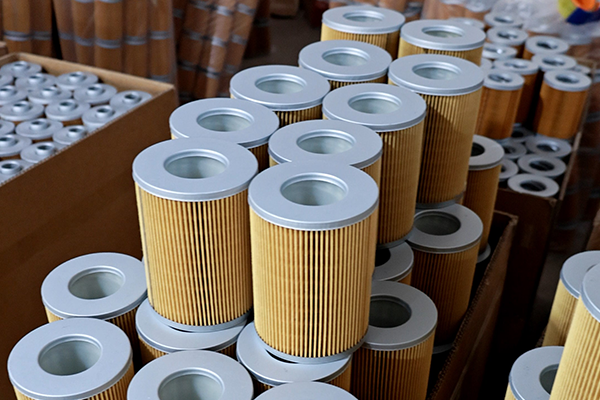
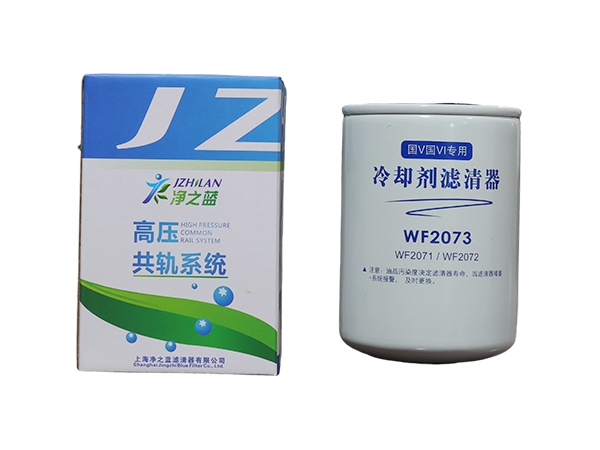
A coolant filter looks simple: a spin-on canister with media inside. But in heavy duty applications, it often contains a chemical charge of Supplemental Coolant Additives (SCAs) — typically formulations built around nitrite, molybdate, or organic acids. As coolant flows through the element, these additives dissolve into the fluid, replenishing the protection the engine's cooling system constantly consumes.
Without that replenishment, the coolant's corrosion inhibitors deplete. Once they're gone, the aluminum, steel, and cast iron components in the cooling system begin to corrode. The most dramatic consequence is cylinder liner cavitation erosion: tiny vapor bubbles form and collapse against the outside of the wet cylinder liners, hammering microscopic pits into the metal until coolant eventually leaks into the combustion chamber. It's a slow, expensive failure that a functioning coolant filter helps prevent.
Where Coolant Filters Fit
On many class-8 trucks and off-highway machines, the coolant filter mounts in the bypass loop of the cooling system — a portion of flow is diverted through the filter continuously, even when the thermostat is closed. This ensures additive dosing happens regardless of engine temperature. Some designs also incorporate a mechanical bypass so that if the element plugs, coolant still circulates rather than starving the engine.
Not every engine uses a coolant filter. Some rely entirely on fully formulated "extended life" coolant (ELC) with organic acid technology (OAT) that doesn't need supplementing. Mixing the two approaches is where problems start — adding SCA-charged elements to an OAT system can overdose the coolant with minerals and cause scaling. Knowing which system your engine uses determines whether a coolant filter is required or contraindicated.
Service Considerations
Coolant filter change intervals are tied to both time and chemical life, not just mileage. A typical SCA-charged element might be rated for 15,000 to 30,000 miles or 12 to 24 months, whichever comes first. But the real signal is a coolant analysis: testing nitrite or OAT levels tells you whether additive concentration is in the protective window.
When replacing a coolant filter, it's good practice to pre-fill the new element with clean coolant before installation. This avoids introducing air into the loop and prevents a brief period of dry running. After installation, check the system for leaks at the filter seal — a weeping coolant filter is easy to spot and should be addressed before it becomes a roadside issue.
Operators should also be aware of the difference between a "conditioned" coolant filter (with SCA charge) and a "blank" or "straight" filter (no chemical charge, just mechanical filtration). Using a blank element in a system that relies on the filter for additive dosing leaves the coolant unprotected. Always match the element type to the cooling system's chemistry.
Why This Matters for Uptime
Cooling system failures are among the top causes of on-road breakdowns for heavy duty trucks. A failed water pump, a rotted radiator, or a cavitated liner can sideline a vehicle for days. The coolant filter — modest as it looks — is a frontline defense in avoiding those failures. Treating it as a routine, chemistry-aware service item costs almost nothing compared to the downtime it prevents.
References
ASTM D4985. (2020). Standard Specification for Prediluted Aqueous Engine Coolant (50 Volume % Minimum) for Heavy-Duty Engines. ASTM International.
TMC (American Trucking Associations' Technology & Maintenance Council). (2021). RP 329: Cooling System Maintenance and Coolant Filter Selection. ATA TMC.
SAE International. (2019). SAE J814: Engine Coolant Testing and Filtration Guidelines. Society of Automotive Engineers.
Caterpillar Inc. (2018). Cooling System and Coolant Filter Application Guide. Caterpillar Technical Publications.
Heavy Duty Trucking Magazine. (2022). Cavitation Erosion: The Silent Killer of Cylinder Liners. Industry Report.
 Recommended Products


 Contact us
—— Contact:Mr. Gao
—— Tel:+86 19565234361
—— Email:gaomark706@gmail.com
—— Url:https://www.jzl-filter.com
—— Address:Hejian City, Cangzhou City, Hebei Province