
NewsDetails
Fuel Filter Water Separator Function in Diesel Applications
author:Chengrui time:2026-02-17 21:00:59 Click:60
Understanding the fuel filter water separator is essential for protecting modern diesel engines from contamination, corrosion, and performance loss. Diesel fuel systems operate under high pressure and tight tolerances, especially in common rail and electronic injection systems. Even small amounts of water or particles can damage injectors, reduce combustion efficiency, and shorten engine life.
A properly designed fuel filter water separator removes both solid contaminants and free water before fuel reaches sensitive components. Behind stable performance is professional manufacturer production and scalable factory production, ensuring consistent structure, filtration efficiency, and reliable bulk supply. This article explains the fuel filter water separator function in diesel applications, its structure, performance role, and why production quality matters for long-term reliability.
What Is a Fuel Filter Water Separator?
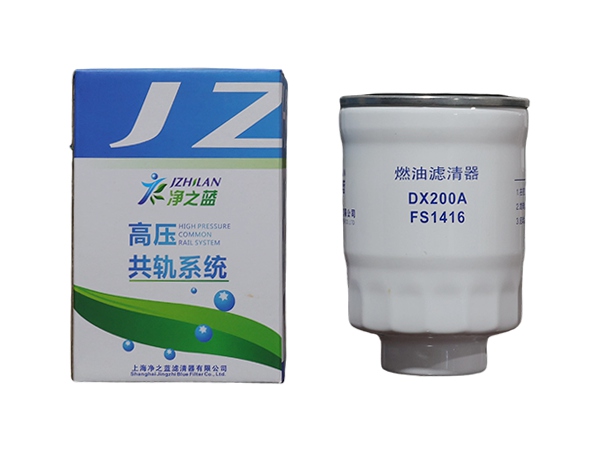
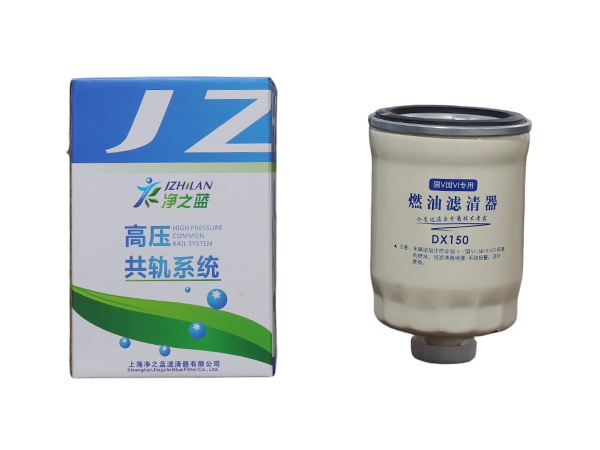
A fuel filter water separator is a dual-function filtration device used in diesel fuel systems to remove:
·Solid particles such as rust and dust
·Free and emulsified water in diesel fuel
Water enters diesel systems through condensation, poor storage, or contaminated refueling. Unlike gasoline, diesel is more prone to water retention, which leads to microbial growth, corrosion, and injector damage.
The main value of a fuel filter water separator is keeping fuel clean and dry while maintaining stable flow and pressure. Through controlled factory production, separators are manufactured with precise dimensions to suit different diesel engine requirements.
Basic Structure of a Fuel Filter Water Separator
To understand performance, it is important to examine the internal structure supporting the fuel filter water separator:
·Filtration media for particle removal
·Water-repellent layers for separation
·Housing for pressure resistance
·Inlet and outlet ports for fuel routing
·Collection bowl for separated water
·Drain valve for water discharge
Each part works together so diesel fuel flows smoothly while water and contaminants remain trapped.
During manufacturer production, pleating geometry and housing forming are tightly controlled to maintain filtration area and mechanical stability for bulk supply.
How Water Separation Works
The core function of a fuel filter water separator is based on density difference and surface treatment. Water is heavier than diesel fuel. When fuel enters the separator:
1.Flow slows down inside the housing.
2.Larger water droplets fall to the bottom by gravity.
3.Hydrophobic media repels water while allowing fuel to pass.
4.Separated water collects in the bowl for draining.
This multi-stage separation improves water removal efficiency without restricting fuel delivery.
Proper media selection during factory production balances water separation performance with flow stability so engines are not starved of fuel.
Filtration Media and Contaminant Control
Besides water, diesel fuel carries solid contaminants from tanks, pipelines, and refueling equipment.
The filtration media inside a fuel filter water separator is usually composed of:
·Cellulose fibers
·Synthetic layers
·Composite blends
These materials contain microscopic pores that capture particles while allowing fuel molecules to pass. Larger debris remains on the surface, while finer particles are trapped deeper in the structure.
Effective contaminant control protects:
·Injection pumps
·High-pressure rails
·Injectors
·Combustion chambers
Through professional manufacturer production, media uniformity and bonding are controlled to ensure stable filtration efficiency in every unit supplied.
Fuel Flow and Pressure Stability
Diesel engines require precise fuel pressure for correct atomization and combustion timing. Any restriction can cause:
·Power loss
·Hard starting
·Injector malfunction
·Increased fuel consumption
A well-designed fuel filter water separator ensures:
·Low flow resistance
·Even distribution
·Stable downstream pressure
·Consistent injector supply
Internal support structures prevent media collapse under pressure pulsation. Port geometry ensures smooth fuel routing across temperature variations.
Advanced factory production integrates flow testing and pressure calibration to ensure each fuel filter water separator performs reliably in real diesel applications.
Corrosion Prevention and Microbial Control
Water in diesel fuel creates ideal conditions for corrosion and microbial growth. These microorganisms form sludge that blocks filters and damages fuel systems.
By removing water early, a fuel filter water separator:
·Reduces rust formation
·Prevents microbial contamination
·Protects seals and metal surfaces
·Extends component service life
This protective role is a major reason why fuel filter water separator systems are essential in heavy-duty and industrial diesel environments.
Scalable manufacturer production ensures consistent water separation capacity for long service intervals in bulk supply applications.
Service Life and Maintenance
As contaminants and water accumulate, resistance increases inside the fuel filter water separator. If not maintained, performance may decline.
Routine replacement and drainage help:
·Maintain injector accuracy
·Prevent pump overload
·Avoid sudden engine shutdown
·Preserve fuel economy
Long-life separator designs use increased media area and reinforced housings to support extended operation.
Modern factory production supports consistent manufacturing of high-capacity fuel filter water separator units for fleets and industrial maintenance planning.
Applications in Diesel Systems
Fuel filter water separators are widely used in:
·Commercial trucks
·Construction machinery
·Agricultural equipment
·Marine diesel engines
·Power generation systems
Each environment introduces different contamination levels, vibration loads, and moisture exposure.
Through scalable manufacturer production, fuel filter water separator designs can be adapted to different flow rates and operating pressures while maintaining reliable filtration behavior.
How Production Quality Impacts Performance
Even strong designs fail without consistent manufacturing. Media pleating, seal molding, housing forming, and valve assembly all influence real-world operation.
High-level factory production integrates:
·Automated assembly
·Flow testing
·Water separation efficiency testing
·Pressure resistance inspection
These processes ensure each fuel filter water separator delivered in bulk supply performs with stable structure and predictable performance.
Reliable production improves consistency, traceability, and operational stability across large production volumes.
Bulk Supply Advantage for Fuel Filter Water Separator Systems
Behind every efficient fuel filter water separator is dependable production capacity. From raw material sourcing to assembly and packaging, every step affects filtration reliability.
Professional manufacturer production supports customization for different diesel platforms. Strong factory production enables continuous bulk delivery without sacrificing separation efficiency or mechanical integrity.
This production advantage reduces operational risk for distributors, fleets, and industrial users.
Conclusion
The fuel filter water separator plays a critical role in diesel applications by removing water and solid contaminants, stabilizing fuel flow, preventing corrosion, and protecting high-precision injection systems. From separation media and structural support to pressure stability and microbial control, every design element influences engine reliability.
With professional manufacturer production and dependable factory production capability, fuel filter water separator systems can be supplied in bulk with consistent structure, separation efficiency, and long-term performance stability.
Understanding fuel filter water separator function is not only a maintenance choice, but a strategic investment in diesel engine durability, fuel efficiency, and operational reliability across automotive and industrial applications.
References
GB/T 7714:Stone R. Introduction to internal combustion engines[M]. London: Macmillan, 1999.
MLA:Stone, Richard. Introduction to internal combustion engines. Vol. 3. London: Macmillan, 1999.
APA:Stone, R. (1999). Introduction to internal combustion engines (Vol. 3). London: Macmillan.
 Recommended Products


 Contact us
—— Contact:Mr. Gao
—— Tel:+86 19565234361
—— Email:gaomark706@gmail.com
—— Url:https://www.jzl-filter.com
—— Address:Hejian City, Cangzhou City, Hebei Province