
NewsDetails
How Fuel Filters Affect Engine Performance and Longevity
author:Chengrui time:2026-08-25 17:36:42 Click:64
Most drivers know to check their air filter. Fewer think about the fuel filter until something goes wrong. That is a mistake. The fuel filter sits in the pipeline between the tank and the injection system, and when it fails — or when it is simply past its service life — the downstream damage can be expensive, inconvenient, and entirely preventable.
Contaminants That Never Reach the Injector
Fuel leaves the refinery clean enough, but the journey to your engine is long. Tanks accumulate water and sediment over years. Biofuel blends — common across many markets — introduce microbial growth and organic acids. Even brand-new diesel picked up from a busy station can carry trace particles of rust from aging underground storage infrastructure.
Without a filter in the line, all of that reaches the injection pump and injectors. Diesel injection systems operate at pressures exceeding 30,000 psi in modern common-rail designs. A particle smaller than a grain of sand can score a high-pressure pump plunger or block a precision injector orifice. The filter is the only thing standing between those contaminants and parts that cost hundreds to replace.
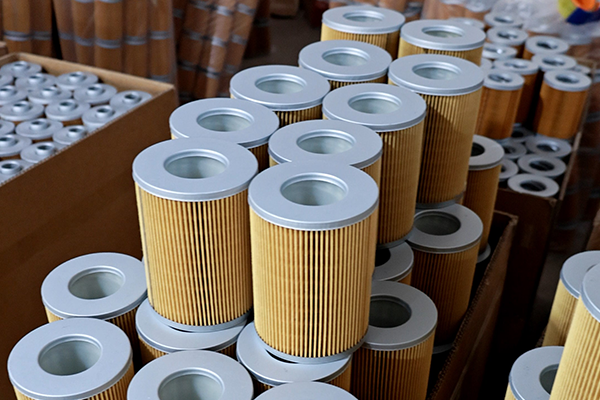
Fuel filters are rated by micron size, just like oil filters. A typical gasoline engine filter holds back particles above 10 microns. Diesel filters often go finer, with primary filters at 5 to 10 microns and secondary filters pushing below 3 microns in some heavy-duty applications. The numbers are small, but the consequences of skipping them are not.
How Clogged Filters Drain Your Fuel Economy
A filter does its job by restricting flow. When the media is clean, the restriction is minimal and the pump works normally. As debris accumulates, restriction increases, and the pump has to work harder to maintain the same flow rate to the injectors. More pump work means more energy draw from the engine, which means more fuel consumed to produce the same output.
In practice, a moderately clogged fuel filter can increase fuel consumption by 5 to 10 percent. Over a year of driving, that adds up. A filter that costs a few dollars to replace quietly burns through extra fuel at the pump, week after week, until it is eventually changed. The math is almost always in favor of timely replacement.
Some modern direct-injection engines are particularly sensitive. They demand a precise, uninterrupted fuel supply at high pressure. Even small fluctuations caused by a struggling filter can throw off the air-fuel mixture, leading to increased fuel consumption and higher tailpipe emissions — which, in regions with emissions testing, can mean a failed inspection sticker.
Performance Loss You Can Feel
Clogged fuel filters produce symptoms that are hard to miss once you know what to look for. Hesitation under acceleration is common — the engine is asking for more fuel, but the filter cannot deliver it fast enough. At low loads, the problem may not even show up. Put the engine under demand and the restriction becomes a bottleneck.
Stalling and rough idling can also point to fuel delivery problems. If the filter is blocking flow enough that the injection system runs lean at idle, cylinders misfire. The engine shakes, rpm fluctuates, and in severe cases the engine simply shuts off. These symptoms get misdiagnosed more often than they should, sending owners chasing spark plugs or sensors when the real culprit sits in the fuel line.
Diesel engines show the problem even more clearly. Hard starting, loss of power under load, and black smoke from the exhaust are all associated with restricted fuel supply. Black smoke specifically means the engine is running rich — a condition that can occur when insufficient fuel delivery forces the engine control unit to compensate by enriching the mixture, which paradoxically creates the exact opposite of what a clean-running engine should do.
Long-Term Damage from Poor Filtration
The injection pump is the most expensive casualty of bad fuel filtration. In high-pressure diesel systems, the injection pump generates forces that make precision watchmaking look crude by comparison. Particles that enter the pump accelerate wear on the hardened surfaces of plungers and barrels, reducing pump efficiency and eventually leading to internal leakage that cannot be repaired — only replaced.
Injectors are equally vulnerable. Clogged injector holes disrupt spray pattern, which ruins combustion efficiency and puts extra thermal load on individual cylinders. One bad injector can pull down the performance of the entire engine. Replacing a set of four injectors costs far more than four fuel filters would have over the same period.
Water in fuel is a separate threat that a quality filter also handles. Water causes corrosion in steel injection components and promotes microbial growth that clogs lines. Many diesel-specific filters incorporate a water separation function, coalescing water droplets so they can be drained from a collection bowl at the base of the filter housing.
The Connection Between Fuel Quality and Filter Choice
Not all fuel is equal, and not all filters are suited for all fuel. Diesel fuel's growing use of biodiesel blends — particularly B5 and B20 formulations common in commercial trucking — creates different degradation challenges for filter media. Biofuel tends to hold more water and can accelerate microbial growth, which means filters in high-biodiesel markets may need more frequent service intervals than the same vehicle would require on conventional diesel.
Choosing a filter rated for the specific fuel being used matters more than most maintenance schedules acknowledge. A factory-spec filter from a reputable manufacturer will specify the micron rating, flow capacity, and fuel compatibility. Switching to a cheaper, underspecified filter to save a few dollars is a trade that rarely works out in the driver's favor.
The fuel filter is easy to ignore. It sits hidden in the frame rail or under the vehicle, out of sight and out of mind until something breaks. But it is one of the highest-leverage maintenance items on any engine. A clean filter at the right interval is cheap insurance against a fuel system repair bill that will make you wish you had paid attention sooner.
References
Heywood, J. B. (2018). Internal Combustion Engine Fundamentals. 2nd Edition. McGraw-Hill Education.
Society of Automotive Engineers. (2019). SAE J1832: Diesel Fuel Performance and Injector Deposit Test Procedures. SAE International.
International Council on Clean Transportation. (2020). Diesel Fuel Quality and Its Impact on Heavy-Duty Engine Emissions Control Systems. ICCT Technical Report.
Stachowiak, G. W. & Batchelor, A. W. (2017). Engineering Tribology. 4th Edition. Butterworth-Heinemann.
U.S. Department of Energy, National Energy Technology Laboratory. (2021). Advanced Fuel System Technologies for Improved Diesel Engine Efficiency and Durability. DOE Technical Report.
 Recommended Products


 Contact us
—— Contact:Mr. Gao
—— Tel:+86 19565234361
—— Email:gaomark706@gmail.com
—— Url:https://www.jzl-filter.com
—— Address:Hejian City, Cangzhou City, Hebei Province