
NewsDetails
Oil Filter Working Principle Step by Step
author:Chengrui time:2026-02-08 18:08:00 Click:144
Understanding the oil filter working principle is essential for maintaining engine reliability, lubrication efficiency, and long-term performance. In automotive, industrial, agricultural, and power generation systems, clean oil protects bearings, pistons, camshafts, and hydraulic components from premature wear.
Behind every reliable oil filter is professional manufacturer production and scalable factory production capability, ensuring consistent structure, accurate filtration media, and stable performance for bulk supply. This article explains the oil filter working principle step by step, covering oil flow, filtration stages, pressure control, and how production quality supports dependable operation.
What Is an Oil Filter?
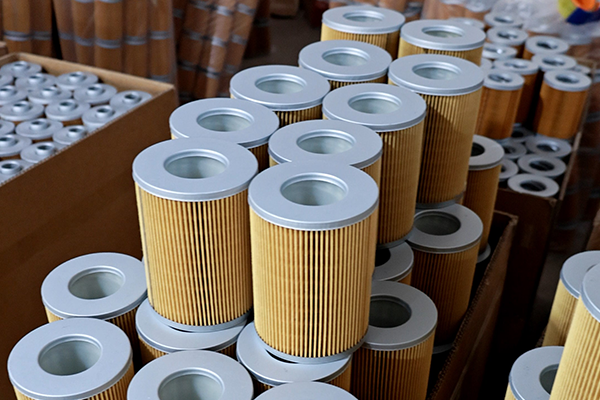
An oil filter is a mechanical device designed to remove contaminants from engine oil before the oil circulates through critical engine parts. These contaminants include:
·Metal particles from wear
·Carbon deposits from combustion
·Dust and sand from the environment
·Sludge from oil oxidation
Without filtration, dirty oil accelerates component damage and shortens engine life. The oil filter working principle ensures that oil stays clean while maintaining proper flow and pressure across operating conditions.
Through controlled factory production, oil filters are manufactured with precise dimensions and consistent filtration accuracy to match different engine requirements.
Main Components Behind the Oil Filter Working Principle
Before explaining the steps, it helps to understand the internal structure that supports the oil filter working principle:
·Filter media for trapping contaminants
·Metal housing for pressure resistance
·Center tube for structural support
·End caps and adhesives for sealing
·Gasket for external sealing
·Bypass valve for pressure protection
·Anti-drainback valve for oil retention
Each component works together so the oil filter can clean oil without disrupting engine lubrication.
Modern manufacturer production integrates automated assembly and inspection to ensure these components perform consistently in bulk production.
Oil Filter Working Principle Step by Step
The oil filter working principle can be divided into several continuous stages that occur every time the engine runs.
Step 1: Oil Entry from the Pump
When the engine starts, the oil pump draws oil from the oil pan and pushes it toward the oil filter under pressure.
At this stage, oil may already contain microscopic debris generated from previous engine cycles. The inlet design directs oil evenly around the outer edge of the filter media to avoid localized pressure stress.
Stable oil entry is the foundation of the oil filter working principle.
Step 2: Flow Distribution Around the Media
Once inside the housing, oil is distributed around the circumference of the filter element. This distribution ensures that all pleats of the media participate in filtration.
Uneven distribution can reduce efficiency and shorten service life. Through precision factory production, pleat geometry and spacing are controlled to optimize surface area and flow stability.
This step ensures the oil filter working principle functions uniformly across the entire media.
Step 3: Filtration Through the Media
The heart of the oil filter working principle occurs when oil passes through the filter media.
The media, typically made from cellulose, synthetic fibers, or blended materials, contains microscopic pores. These pores allow oil molecules to pass while trapping solid particles.
Larger particles are captured on the outer layers, while smaller particles are trapped deeper inside the media structure. This layered process increases dirt-holding capacity and extends service life without excessive restriction.
Proper media selection during manufacturer production balances filtration efficiency and flow resistance.
Step 4: Structural Support and Flow Stabilization
After oil passes through the media, it enters the center tube. The center tube prevents the filter element from collapsing under pressure and keeps oil flow stable.
Perforations in the tube allow clean oil to flow smoothly toward the engine block.
This mechanical support stage is a hidden but critical part of the oil filter working principle, especially during cold starts when oil viscosity is high.
Step 5: Pressure Control via the Bypass Valve
If the filter becomes clogged or oil is very thick in cold temperatures, pressure can increase rapidly.
To prevent oil starvation, the bypass valve opens when pressure exceeds a preset value. This allows oil to flow directly to the engine, even if filtration is temporarily reduced.
Although bypass operation reduces filtration, it protects the engine from lubrication failure.
During factory production, bypass valve calibration ensures predictable pressure response for different operating environments.
Step 6: Anti-Drainback Function
When the engine stops, gravity can cause oil to drain back into the oil pan.
The anti-drainback valve closes the inlet ports, keeping oil inside the filter. This prevents dry starts and ensures fast lubrication during the next ignition cycle.
Maintaining oil retention is another important part of the oil filter working principle, especially for vertically mounted filters.
Step 7: Clean Oil Delivery to Engine Components
Finally, filtered oil exits the filter and flows into the engine’s lubrication channels. It reaches bearings, pistons, camshafts, and valve trains, forming a protective oil film.
Consistent clean oil delivery completes the oil filter working principle and supports stable combustion, reduced friction, and extended component life.
Why Flow Capacity Matters in the Oil Filter Working Principle
A successful oil filter working principle balances two key factors:
·Filtration efficiency
·Flow capacity
If flow is too restricted, the engine may experience pressure drops. If filtration is too loose, contaminants pass through.
Through controlled manufacturer production, oil filters are designed with sufficient media area and optimized pore structure to support both protection and performance.
Service Life and Contamination Control
As contaminants accumulate, resistance increases. Eventually, the oil filter reaches its dirt-holding capacity.
Replacing the filter on schedule ensures the oil filter working principle continues to function correctly. Extended service intervals require larger media surface area and reinforced structural components.
Modern factory production supports long-life designs for heavy-duty and industrial engines.
Applications Supported by Oil Filter Working Principle Design
Oil filters operate in many environments:
·Passenger vehicles
·Trucks and buses
·Construction machinery
·Agricultural equipment
·Power generation systems
Each application presents different contamination levels, temperatures, and vibration loads.
Scalable manufacturer production allows oil filter designs to be adapted for various operating conditions while maintaining consistent filtration behavior.
How Production Quality Impacts Oil Filter Working Principle Performance
Even the best design fails without reliable manufacturing. Media pleating accuracy, adhesive curing, gasket molding, and housing forming all influence real-world performance.
Advanced factory production integrates automation, leak testing, pressure testing, and dimensional inspection to ensure every oil filter supports the intended oil filter working principle.
Stable production also supports bulk supply with repeatable quality for industrial and fleet customers.
Bulk Supply Advantage for Oil Filter Systems
Behind every efficient oil filter working principle is dependable production capacity. From raw materials to assembly, testing, and packaging, each step influences filtration reliability.
Professional manufacturer production supports customization and scalability. Strong factory production enables consistent bulk delivery without sacrificing performance stability.
This production advantage reduces operational risk for equipment operators and long-term maintenance planning.
Conclusion
The oil filter working principle operates through a continuous process of oil entry, media filtration, structural support, pressure regulation, anti-drainback control, and clean oil delivery. Each step protects engine components from wear, corrosion, and performance loss.
With professional manufacturer production and reliable factory production capability, oil filters can be supplied in bulk with consistent structure, filtration accuracy, and long service life.
Understanding the oil filter working principle is not only valuable for maintenance planning, but also for selecting filtration solutions that support efficiency, durability, and operational stability across automotive and industrial applications.
References
GB/T 7714:Williams J A. Engineering tribology[M]. Cambridge university press, 2005.
MLA:Williams, John Austin. Engineering tribology. Cambridge university press, 2005.
APA:Williams, J. A. (2005). Engineering tribology. Cambridge university press.
 Recommended Products


 Contact us
—— Contact:Mr. Gao
—— Tel:+86 19565234361
—— Email:gaomark706@gmail.com
—— Url:https://www.jzl-filter.com
—— Address:Hejian City, Cangzhou City, Hebei Province